
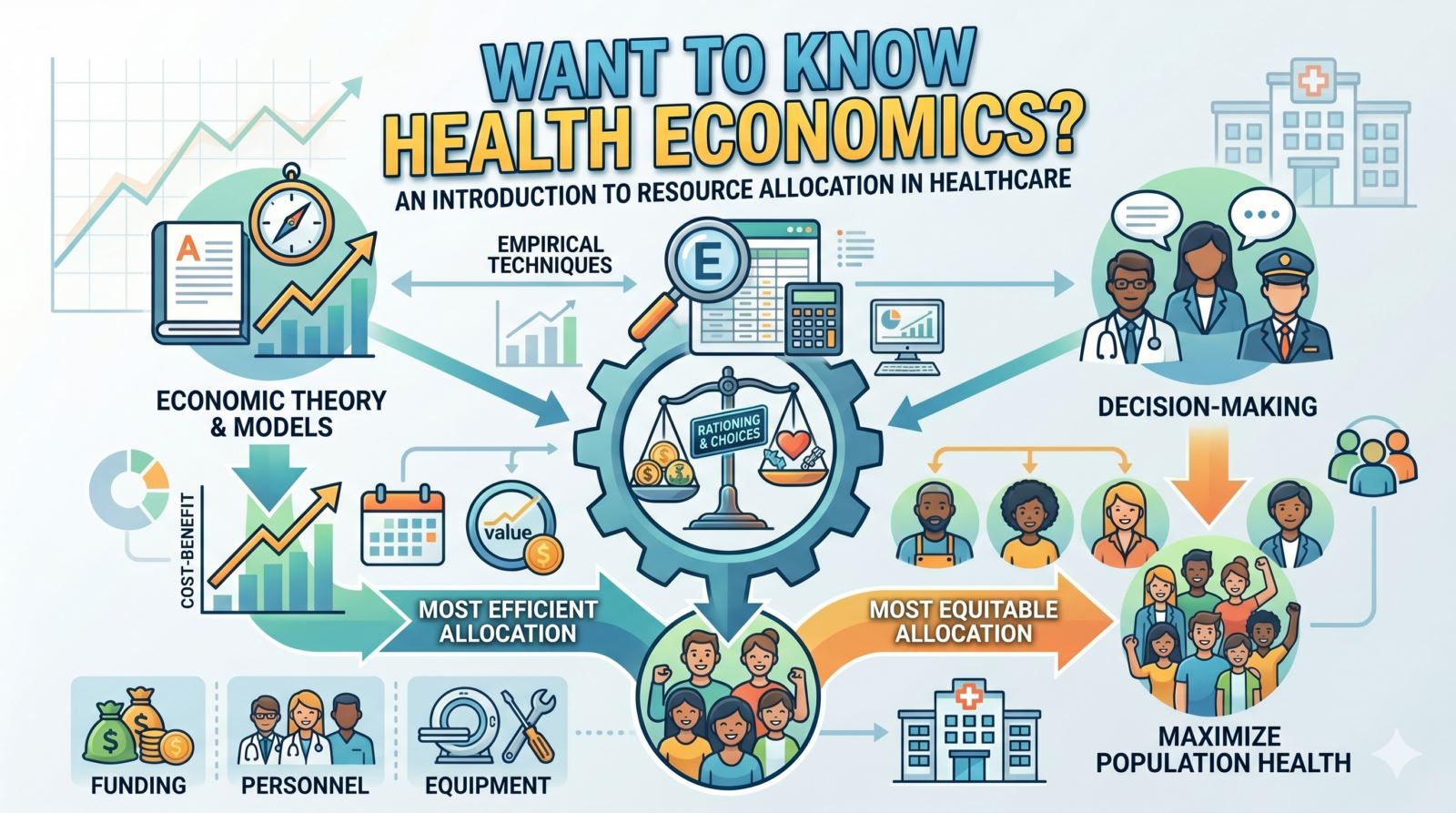
Health economics applies economic theory, models, and empirical techniques to analyze decision-making by individuals, healthcare providers, and governments. It addresses the fundamental challenge of scarcity by seeking the most efficient and equitable allocation of limited resources—such as funding, personnel, and equipment—to maximize population health.
Unlike traditional markets, the healthcare sector is distinctly characterized by informational asymmetry between patients and providers, extreme uncertainty regarding disease incidence, and the pervasive role of third-party insurers.
Consequently, health economists evaluate trade-offs, opportunity costs, and both technical and allocative efficiency to guide policies that optimize health outcomes and societal welfare
